Showing posts with label muscular imbalances. Show all posts

Patellar Femoral Syndrome Part 2

          My last post discussed the chronic condition known as patellar femoral syndrome, the related symptoms, and possible treatments.  Since it is always better to bypass injuries than figure out how to recover from them, this post will address some causes of this condition and how to avoid them.

      This condition occurs when the patella, or knee cap, is misaligned. When it is misaligned, it cannot slide along the groove in the femur when it moves. The patella can move out of this position as a result of an acute injury from a fall or a sudden movement, but one of the main causes is a misalignment that develops over a period of time.  This misalignment occurs when the muscles that are meant to stabilize this joint and hold the knee cap in position begin pulling on the knee joint unevenly.  

          Muscle groups work in pairs. The pairs work opposite each other - one group extending while the other flexes, or bends the joint. In order to create stability, both groups need to pull on the joint evenly, creating equal tension in all directions. When one muscle group is tighter than its partner group, the tension is unequal and the patella is pulled out of position.   
                   

        This condition can be the result of tight quadriceps, which are the four muscles along the front of the thigh, or tight hamstrings, which are the muscles that run along the back of the thigh. These muscular imbalances can be avoided by making sure that all of the muscles are worked and stretched evenly. 
        
        Dancers tend to use certain muscle groups more than others and need to be aware of what muscles may not be worked as often. Cross training in other activities like yoga, Pilates, biking, swimming or walking can help ensure that all muscles are worked evenly.  Dancers also need to be aware of the iliotibial band, also called the IT band for short - this tendon connects the gluteus maximus muscle and the tensor fascial lata muscle to the skeleton.  Dancers use the gluteus maximus a lot since it is responsible for returning the leg to its original position after it has been lifted to the front, lifting the leg in arabesque, and is one of the main muscles involved in turning the leg out.  

            The tensor fascia lata is constantly relied upon by dancers as it is responsible for lifting the leg to the front and the side and rotating it inward. 

        The constant use of these two muscles causes the IT band to grow tight. Dancers need to stretch out the IT band often so it does not pull the knee joint out of position.

        By simply being aware of which muscles might need some extra work and being sure to stretch every muscle equally, most chronic conditions relating to poor skeletal alignment can be avoided.  It is extremely important for dancers to learn about muscular imbalances, to know their own bodies and to cross train to be healthy, strong dancers.


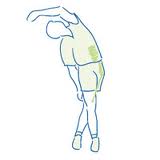
Choosing Which Side to Start On…Does It Make a Difference?

        “Think left and think right and think low and think high. Oh, the thinks you can think up if only you try!”― Dr. Seuss 


          "Right foot front", "Let's start on the right", and "Stand with your left hand on the barre, starting with your right foot" are common phrases in almost all dance classes. Turns are normally done to the right first, and groans are

commonly heard when a teacher requests that the turns be repeated to the left. Is this because a large majority of the dance population has a preference for the right side, or is this because dance classes favor the right side?          
          Children demonstrate a preference for being right or left handed at a young age. By the time they learn to write, it is usually clear which hand is preferred. However, children are normally mixed footed, not showing a preference for either their right or left feet, until late childhood or early adolescence. Studies have suggested that the preference that develops is partially a result of environmental influences. (2)

          If the environment is influential in determining which side a dancer prefers, known as a lateral bias, it seems that dance educators should examine their manners of teaching. Data gathered from observing 20 different ballet classes showed that dancers practice combinations on the right side up to 26% more than they do on the left.(1)

          Most teachers demonstrate the combination on the right side which encourages modeling on the right side. When the class marks the combination, it is usually done to the right, and the combination is usually performed first on the right side. In many cases, there is no demonstration or rehearsal on the left side, and students are simply expected to perform the exercise on the left. When dancers were interviewed about common practices in class, only 12% expected that combinations would be demonstrated on the left side as well as the right.(3)

          Most dancers will claim that they prefer the right side, but if both sides were treated equally in class, perhaps that claim might be different. In a study conducted on 40 undergraduate dancers who were taught a combination on the left side and then asked to perform it on the right side, the dancers were able to transfer the steps to the right side significantly well.(5) The transfer seems to indicate that although students might prefer to learn a combination on the right first, it may only be as a result of habit. Continuously learning a combination on the right side first, reinforces neural pathways between the brain and the right side of the body. Therefore, when learning a combination on the left side first, it would seem that the dancer would have to be more engaged and focused because the pathways would not be as well developed. Further support of this theory comes from a study including both novice and experienced dancers that showed left side learning took more time. (4)

          In addition to developing habits, lateral bias in dance class could also be causing imbalances in muscle strength and joint range of motion since one side of the body is being used more than the other. It would be beneficial for dance educators to consider varying class and making a conscious effort to demonstrate, mark, and/or begin combinations on the left some of the time.

          In doing so, educators could begin to address and possibly decrease developing muscular imbalances, reinforce more neural pathways, and create an atmosphere of deeper focus and engagement in class. This type of class variation will help to create healthier dancers who might even end up able to turn well on both sides.
-----------------------------------------------------------------------
(1) Farrar-Baker, A. & Wilmerding, V. Prevalence of lateral bias in the teaching of            beginning and advanced ballet. Journal of Dance Medicine and Science, 2006; 10 (3&4) 81-4.
 (2)Gabbard C, Iteya M. Foot laterality in children, adolescents and adults. Laterality. 1996;1(3):199-205.
 (3)Kimmerle M. Lateral bias in the dance class. In: Chin MK, Hensley L, Coté P, Chen S (eds): Global Perspective in the Integration of Physical Activity, Sports, Dance, and Exercise Science in Physical Education: From Theory to Practice. Hong Kong: Contemporary Development, 2004, pp.167-174.
(4) Kimmerle M, Coté P, Patterson J. Bilateral transfer of right and left dance sequences in experienced and novice dancers. In: Solomon R, Solomon J (eds): Proceedings of the 17th Annual Meeting of the International Association for Dance Medicine & Science 2007. Canberra, Australia: IADMS,2007, pp.18-22.
(5)Puretz, S. Bilateral transfer: The effects of practice on the transfer of complex dance movement patterns. Research Quarterly for Exercise and Sport, 1983; 54(1):48-54.

What To Do About Lateral Hip Snapping

"If you don't take care of your body, where will you live?"


My last blog post, Understanding Why The Hip Snaps, described anterior hip snapping which occurs at the front of the hip and lateral hip snapping which occurs along the outside of the hip.  Lateral hip snapping can be attributed to a tightening in the iliotibial band.


            The gluteus maximus and the tensor fascia lata muscles merge into this band, which is actually a tendon that attaches the two muscles to the skeleton.  Tightness in either of the two muscles, or in the actual tendon itself, can cause a snapping as the iliotibial band slides across the bony projection on the outside of the femur, or thigh bone, called the greater trochanter.


            The gluteus maximus begins at the lower spine and merges with the tensor fascia lata and connects to the leg via the iliotibial (IT) band.  It is responsible for returning the leg to its original position after it has been lifted to the front, lifting the leg in arabesque, and is one of the main muscles involved in turning the leg out.  It is a muscle that is used excessively in all kinds of dance and especially in forms like ballet and Irish dance since they require the dancers to be constantly turned out.

            The tensor fascia lata begins at the front of the pelvis and runs in front of the hip joint before it merges with the gluteus maximus in the IT band.  This muscle is responsible for lifting the leg to the front or the side and rotating it inward.  The constant raising of the legs required in dance relies significantly on this muscle.

            The tendinous IT band itself may also grow tight.  All of the muscles and tendons in our body are surrounded by a strong, fibrous, connective tissue that supports, protects, and holds the shape of the muscles and tendons called fascia.  Fascia is made of densely packed proteins called collagens.  When fasica is healthy, it is soft, elastic, and supple, but when it is irritated or inflamed from overuse, it becomes dry and its fibers contract, bunch up, and become “tangled”.  This bunching causes tightness, and since fascia is also filled with nerves, can be painful.

from www.itftennis.com
            Some immediate ways of dealing with a tight IT band are stretching the gluteus maximus and the tensor fascia lata muscles.  The gluteus maximus can be stretched by lying on the back with the legs extended, and then bending the right knee up toward the left shoulder and holding it for 20-30 seconds and repeating it with the left knee toward the right shoulder.  Dancers can also stretch this muscle by placing one leg up on the barre in a turned out front attitude position while leaning forward over the leg.

from www.physiohub.com
            The tensor fasica lata and the IT band can be stretched by holding onto a chair or barre with the right arm, crossing the right leg behind and around the left leg, pushing the left hip outward, and reaching the upper body to the right toward the barre or chair, holding it for 20-30 seconds, and repeating it on the other side.  This same exercise can also be done by crossing the legs, pushing the hip outward, and bending the upper body all the way over toward the floor.  Of course, it is important that the body be warm when doing any of these stretches.

            Another way to help eliminate some tightness would be to use a foam roller along the outside of the thigh.  Gentle pressure on fascia begins to soften the tissue, elongate the fibers, and “untangle” the bundles so that the fibers become supple once again.

            While the stretching is an immediate fix, it is important to be evaluated by a physical therapist with knowledge of dance medicine to determine how to create balanced hip muscles and keep this problem from becoming a chronic one.

Understanding Why the Hip Snaps


“We will be in tune with our bodies only if we truly love and honor them.” - Harriet Lerner


            The hip joint is an important one for all dancers to understand since it is responsible for flexing and extending the leg, rotating the leg inward and outward, and moving the leg away from the center of the body (abduction) and pulling the leg in toward the center of the body (adduction).

            The hip joint is a ball and socket joint which allows the leg to move in all different directions.  The head of the femur, or thigh bone, fits neatly into a pocket in the pelvis and is held in place by a web of different muscles, tendons, and ligaments.

            An often heard complaint from many dancers is that they hear and feel a snapping or popping in the joint during movements like grand plié and developpé.  The audible noise is a clicking sound, and dancers often simultaneously experience a shift in the skeleton, and it is referred to as hip snapping syndrome.

            The “snapping” of the hip occurs when a muscle or a tendon passes directly over a bone.  The two most common types of snapping at the hip are lateral hip snapping and anterior hip snapping. 

from www.online.epocrates.com
            Lateral hip snapping involves the iliotibial band which is the tendon portion the gluteus maximus and tensor fascia lata muscles.  It runs along the outside of the thigh and attaches to the skeleton near the top of the tibia, one of the bones found in the lower leg.  At the top of the femur, there a bony projection on the outside of the bone called the greater trochanter.  When the leg is extended, the iliotibial band lies just behind the greater trochanter, but when the leg bends, or flexes, at the hip joint, the iliotibial band passes over the greater trochanter and if the tendon or any of its muscles are tight, a snapping will occur as it slides across it.

from www.physioadvisor.com.au
            Anterior hip snapping happens at the front of the hip as opposed to the side of the hip and involves the iliopsoas, which is the merging of the iliacus and psoas muscles.  The iliacus begins at the inside back of the pelvis, while the psoas is attached to the lower vertebra, and they combine to attach to the inside of the femur on a small bony projection called the lesser trochanter.  When the leg is flexed, or bent at the hip, and turned out, the iliopsoas lays across the hip joint.  As the leg extends and moves toward the body, if the muscle is pulled tight, it will snap as it moves across the femoral head.

            Dancers may find that hip snapping syndrome occurs during a growth spurt since bones grow faster than muscles and muscles are taut until they catch up. 

            As long as this snapping is not painful, it does not indicate a serious problem, but it can be a sign of a muscular imbalance.  If the snapping occurs all of the time, there is a good chance that the bursa sacs surrounding the hip joint can become irritated.  The job of a bursa sac is to provide a cushion between soft tissue like muscles and tendons and bones to reduce friction. As the tight tendons and muscles rub closely against the bones the bursae may become inflamed and painful, resulting in bursitis. 

            Keeping the muscles of the hip joint healthy by embarking upon a supplemental conditioning program that strengthens and stretches all of the hip muscles equally will help eliminate any imbalances and contribute to healthy dancing.


What to Do About "Shin Splints"


“Pain insists upon being attended to.” - C.S. Lewis

            “Shin splints” are a common complaint among all different kinds of dancers that can lead to other complications like fractures, if not properly treated.

            The real name for “shin splints” is tibial stress syndrome and occurs when the muscles of the lower leg become swollen and irritated and stress and irritate the periosteum of the tibia.  The periosteum is a sheath that encases bone and has many nerve endings.  As the muscles pull on the periosteum, microscopic tearing occurs, and the nerve endings signal the brain that something is wrong, and we feel pain.


            Those experiencing tibial stress syndrome, will complain of a dull aching pain in the lower leg along the side of the tibia, or shin bone.  This condition most commonly occurs in the tibialis anterior muscle but can also occur in the tibialis posterior, the flexor digitorum longus or the peroneal muscles. (Fitt, 1988).  It is a chronic condition, meaning that it develops slowly over a period of time and then lingers.  Unlike an acute injury, like a fracture of sprain that occurs in an instant and then heals, this condition dissipates slowly and can recur over and over again.

            Tibial stress syndrome is classified as an overuse injury that can be caused by a sudden increase in training or bouts of excessive jumping, but can also be caused by other factors like dancing on a hard surface such as concrete, improper foot alignment which can lead to feet rolling inward when landing from jumps, improper weight distribution in the feet, or muscular imbalances in the lower leg.


            The treatment for tibial stress syndrome involves rest and a break from all jumping.  Ice will help decrease the inflammation of the muscles and the periosteum and will alleviate the pain as will taking an anti-inflammatory.  Gentle stretching can also help.  The muscles along the front of the shin can be stretched by pushing forward on the arches while either standing or kneeling, and the calf muscles can be stretched in exercises described in last week’s post about tight calf muscles.

            Although rest, ice, anti-inflammatories and stretching will alleviate the symptoms, it is important that the dancer determine the cause of tibial stress syndrome to prevent it from constantly recurring.  A physical therapist who is well versed in dance medicine will be able to do a screening to determine if the condition is being caused by muscular imbalances and/or misalignments that can be corrected through strengthening and stretching exercises.

            It is important that dancers do not ignore the pain and continue to dance, in spite of having “shin splints”, because of the additional damage that can be done.  Paying attention to the body’s signals and seeking treatment immediately will shorten the recovery period and keep the dancer healthy.
                                                                                                             

Fitt, S. (1988) Dance Kinesiology.  New York, NY: Schirmer Books.

Do I Really Need to Put My Heels Down When I Jump?


            The dance, just as the performance of the actor, is kinesthetic art, art of the muscle sense." - Rudolf Arnheim


          A pointed foot, a high relevé, a fully stretched foot in a jump – these are all sought after in dance.  Whether dancers study ballet and are constantly on their toes, study tap and dance on the balls of their feet, study Irish dance and are always in a relevé, or study modern and jazz and are stretching their feet in jumps, they demand a lot from their calf muscles.

            There are two calf muscles that are responsible for plantar flexion – what dancers call pointing their feet – the gastrocnemius and the soleus.  Each time a dancer relevés, points his or her feet, or stretches the foot in a jump, these muscles contract to make the action happen.


            The gastrocnemius is the bulging muscle that we see at the back of every dancer’s calf.  This muscle attaches to the femur, or the thighbone, crosses behind the knee, and connects to the calcaneus, or heel bone, via the Achilles tendon.  Its jobs are to flex, or bend, the knee and plantar flex the ankle.  The gastrocnemius is responsible for the movement required in walking, jumping, pointing the foot, and performing a relevé, and is strongly relied upon in fast moving exercises.

            The soleus is located underneath the gastrocnemius, closer to the bones of the lower leg, the tibia and fibula.  It is attached to these two bones near the knee joint, runs the length of the calf, and also connects to the calcaneus by way of the Achilles tendon.  The soleus is a stabilizing muscle that is responsible for maintaining proper alignment at the ankle joint.  This muscle is the one that holds the foot in relevé or in a pointed position.  The soleus is used extensively in adagio exercises or any movements that require held balances.

            Since these muscles are constantly worked, they grow stronger, and if they are not stretched, tighter.  Tight calf muscles create a muscular imbalance in the body that can lead to other issues.  The tighter the calf muscles are, the stronger the pull on the Achilles tendon.  An irritated Achilles tendon becomes inflamed and develops tendonitis. 


  A strained Achilles tendon exerts a strong pull on the calcaneus, which causes the bone in front of it, the talus, to tilt.  As the talus tilts, the joint between the talus and the navicular bone becomes misaligned and causes the foot to pronate, or roll inward.

            
             When tight calf muscles pull upward on the heel, the body weight is shifted forward over the ball of the foot.  To compensate for this weight shift, the curve in the lumbar spine increased to help maintain an upright posture.  This increase curve, however, results in lower back strain and causes pain.

            Although this muscular imbalance is a common one in dance, it is not unavoidable.  Dancers can work on maintaining flexibility in the calf muscles without sacrificing strength.  Being sure to keep the heels on the floor during demi-pliés stretches the calf as does making sure the heels connect with the floor after all relevés and jumps.


                                           Additionally, regularly stretching the calf muscles is a good idea for dancers.  The yoga position downward  dog is an excellent exercise for lengthening the calf as is lying on the back, extending a leg upward, and using a theraband around the foot to pull it into a flexed position.  A standing lunge will also stretch the calf.


All of these exercises should be done with a straight leg to stretch the gastrocnemius and repeated with a bent knee to stretch the soleus.  

These stretches should all be done in parallel positions to be sure that all the muscle fibers are stretched equally. 

            By simply being sure to keep the heels on the floor whenever possible, landing on the entire foot after jumps, and adding a few stretches to their routines, dancers can avoid the problems that tight calf muscles can create.